( 02 )The Restoration Belt
Recovery,
worn close.
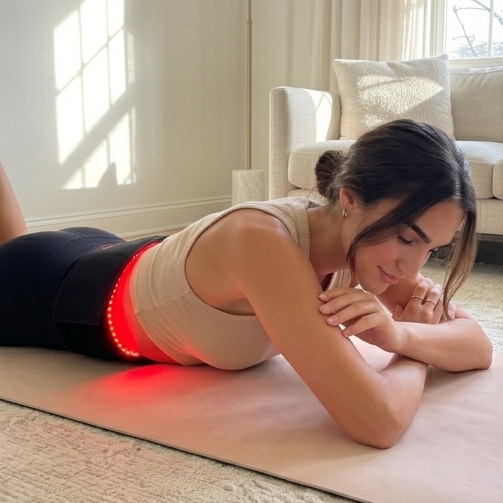
A contoured thermal wrap that holds sustained warmth — and 660nm red and 850nm near-infrared light — against the working muscle. The recovery room, narrowed to the span of your lower back. Fifteen minutes.
( 02 )Who it is for
The work was hours ago. The tightness stayed.
You train, or you sit, or both — and the lower back holds the bill. The recovery room helps, but it is across town and open when you are not.
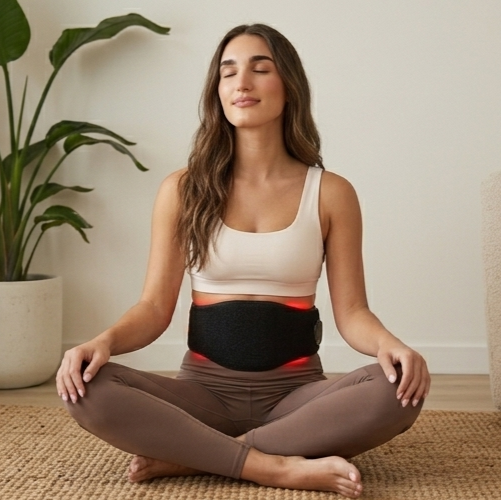
The Restoration Belt holds sustained warmth against the muscle that did the work, with 660nm red and 850nm near-infrared running underneath it. You read, you cook, you keep moving. The instrument works where the load was.
Keep the muscle warm where the work was.
( 03 )Mechanism
Warm. Circulate. Recover.
A warm contact surface and two wavelengths — ordered honestly, strongest evidence first.
Warm
The wrap holds sustained warmth against the muscle, raising local blood flow and keeping the tissue from cooling and stiffening after load. Of everything this instrument does, the warmth is the part with the most evidence behind it.
Circulate
Warmth and pressure together support local circulation — the body's own delivery system for recovery — and hold the light in contact while they do.
Recover
660nm and 850nm sit inside the wavelength band studied for muscle fatigue and exertion recovery. That research is real, and it is modest — very low to moderate quality, pooled across laser and LED. We would rather tell you the true size of it than oversell it.
Zential Pure instruments support the body's own processes. They are not medical devices and do not diagnose, treat or cure any condition, including pain or injury. Our light is LED — it works at the skin and the tissue just beneath it. Claims of red light working at muscle depth come from clinical laser studies, which use a different instrument with a different evidence base. Results build with consistent use and vary between people.
( 04 )What the evidence says
The light is the specification that sounds impressive. The warmth is the part with 59 randomized trials behind it. Here is each one graded, in the terms the researchers used.
How to read the grades. Strong means many trials, pooled together, pointing the same way. Modest means real trials exist and the researchers who pooled them graded the quality low to moderate — worth something, not worth certainty. Adjacent means the study is real, and it tested something next to this rather than this. Nothing on file means we hold no graded review, and the row stays empty instead of being filled with someone else's study.
Only one row on this page is Strong. We are showing you the rest anyway.
Warmth applied to muscle after exertion — Strong
A network meta-analysis of 59 randomized trials across 1,367 patients compared ten recovery interventions. Hot packs ranked first for pain relief within 24 hours of exercise-induced soreness. Wang et al., Journal of Rehabilitation Medicine, 2022. Read the paper · J Rehabil Med, 2022 ↗
What Strong does not cover here: the authors ask that their own results be “treated with caution” because of limited study quality, and write that “further well-designed research is needed to draw firm conclusions”. The trials used hot packs. The Belt is a powered heating element held against you by a wrap — conductive warmth, closely adjacent to what was tested, and not the identical thing.
Why warmth would do that — an explanation, not a result
The same authors propose that heat “can resist the loss of heat after exercise, keep tissue warm, increase blood flow speed and metabolism, and speed up clearance of inflammatory factors, thus reducing pain.”
What this does not cover: a proposed explanation is not a measured outcome. It accounts for the finding above; it adds nothing to it. We are keeping the two separate on purpose, because collapsing them is how a clean diagram turns into a claim nobody tested.
660nm and 850nm for muscle fatigue and exertion recovery — Modest
A systematic review and meta-analysis of 39 trials across 861 participants found positive results using laser and LED, across a 655–950nm band that contains both of our wavelengths. Vanin et al., Lasers in Medical Science, 2018. Read the paper · Lasers Med Sci, 2018 ↗
What Modest does not cover: the authors grade the whole body of evidence “very low to moderate”, citing methodological quality, small samples, and wide variation in protocols. The subject is exertion recovery and muscle fatigue. It is not chronic pain, and it is not knots. This is the one place our exact hardware sits inside a real evidence band, which is why we chose these two numbers — and a real band graded low to moderate is still low to moderate.
Light applied before training rather than after — Modest
Same 2018 analysis: effects are reported most consistently when light is applied before exercise. Most of this category sells light purely as an after-the-fact recovery item.
What Modest does not cover: this is a pattern across lab conditions, not a tested habit. We find it the more interesting half and we cannot tell you it does more for you.
The study we are not using — declined
There is a body of trial evidence showing phototherapy doing something useful for muscle knots. It is real, it is peer-reviewed, and every positive trial in it used a clinic laser — coherent light, a different instrument with a different evidence base. Our device is LED. We do not get to cite those results, so we do not. Any evidence block in this category that shows you a knot diagram is quietly citing them.
Anything about trigger points or knots — Nothing on file
This row is empty on purpose. See the row above for why.
Warmth you feel in the first minute, a light dose sitting inside a band its own researchers call very low to moderate, and a habit that is easier to keep than an appointment. That is the offer, and it is the whole of it.
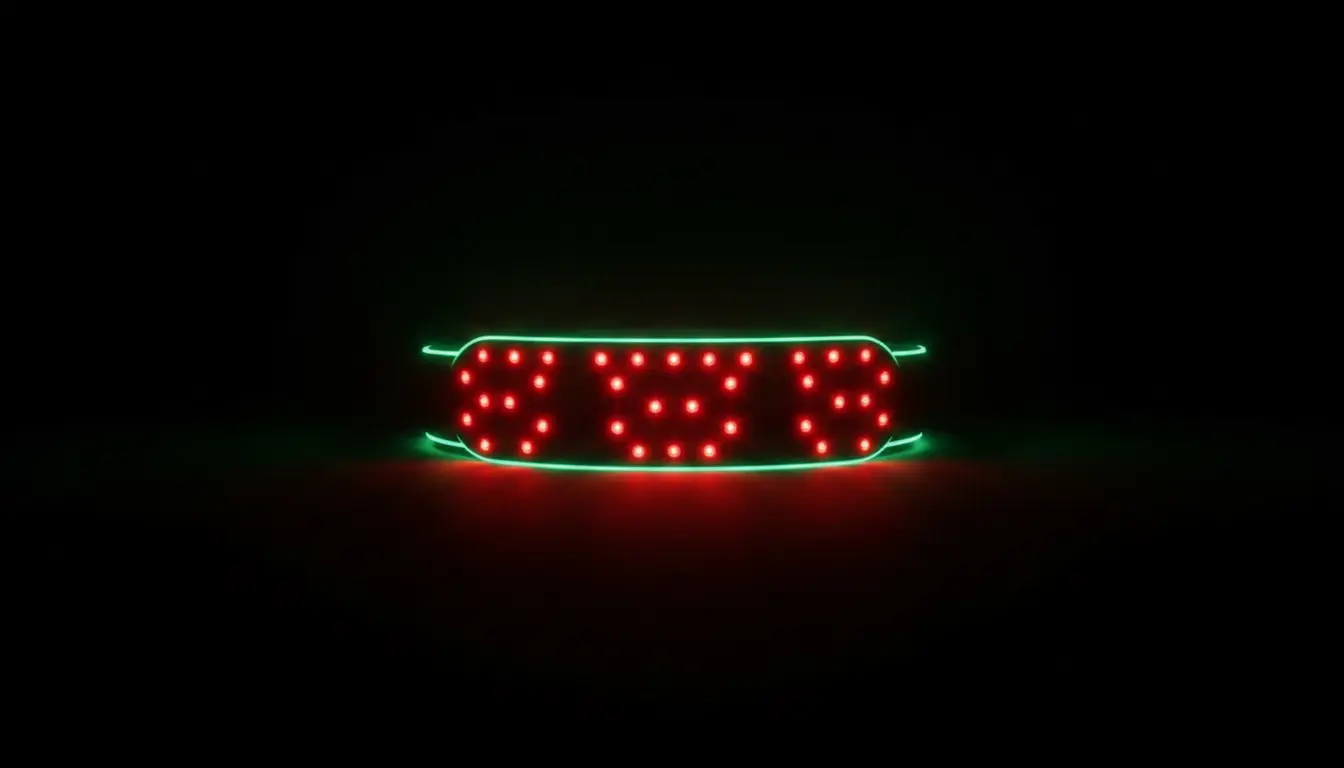
The recovery room, the width of your back.
( 05 )The instrument
- MechanismsRed LED · Near-IR · Thermal · Wrap
- Session15 minutes
- Wavelengths660 nm · 850 nm
- FitContoured wrap · 28–48 in waist
- PowerCordless · USB-C · ~10 sessions / charge
- Warranty1 year
A recovery-room membership runs about €75 a month. The Belt is €180, once — and it doesn't close at 9pm.
No subscription. Cordless, so the only thing it needs from you is fifteen minutes.
Claim a founding placeRead the mechanism30-day money-back guarantee. Wear it for a month. If it does not become part of how you recover, send it back for a full refund. No friction. No questions. Then a 1-year warranty against manufacturing defects and failure in normal use — we cover shipping both ways. Full terms.
- CECE marked · Declaration of Conformity on file
- 1-year warranty
- EU shipping · in 48 hours
- Cordless · USB-C
( 06 )Before you order
Questions, answered plainly.
Where can I wear it?
Why both 660nm and 850nm?
Should I use it before or after training?
Does it get hot?
Can I move while wearing it?
What if it is not for me?
( 07 )In their words
Founding reviews are coming in.
The first hundred are calibrating the protocol now. Their words land here as they arrive — and on our public Trustpilot profile.
See Zential Pure on Trustpilot →Take the 10-minute Face Protocol by email.
The same sequence the instruments are built around — yours to read first. No spam, leave whenever.
( 08 )Founding cohort
The first buyers set the protocol.
Founding members buy at the launch price, get first access to new instruments, and a direct line to the people calibrating the protocols.
( 09 )Complete the system
Three instruments, one protocol.
Face, body, full rest. Each instrument works alone — together they cover the whole day. The complete System runs €399.
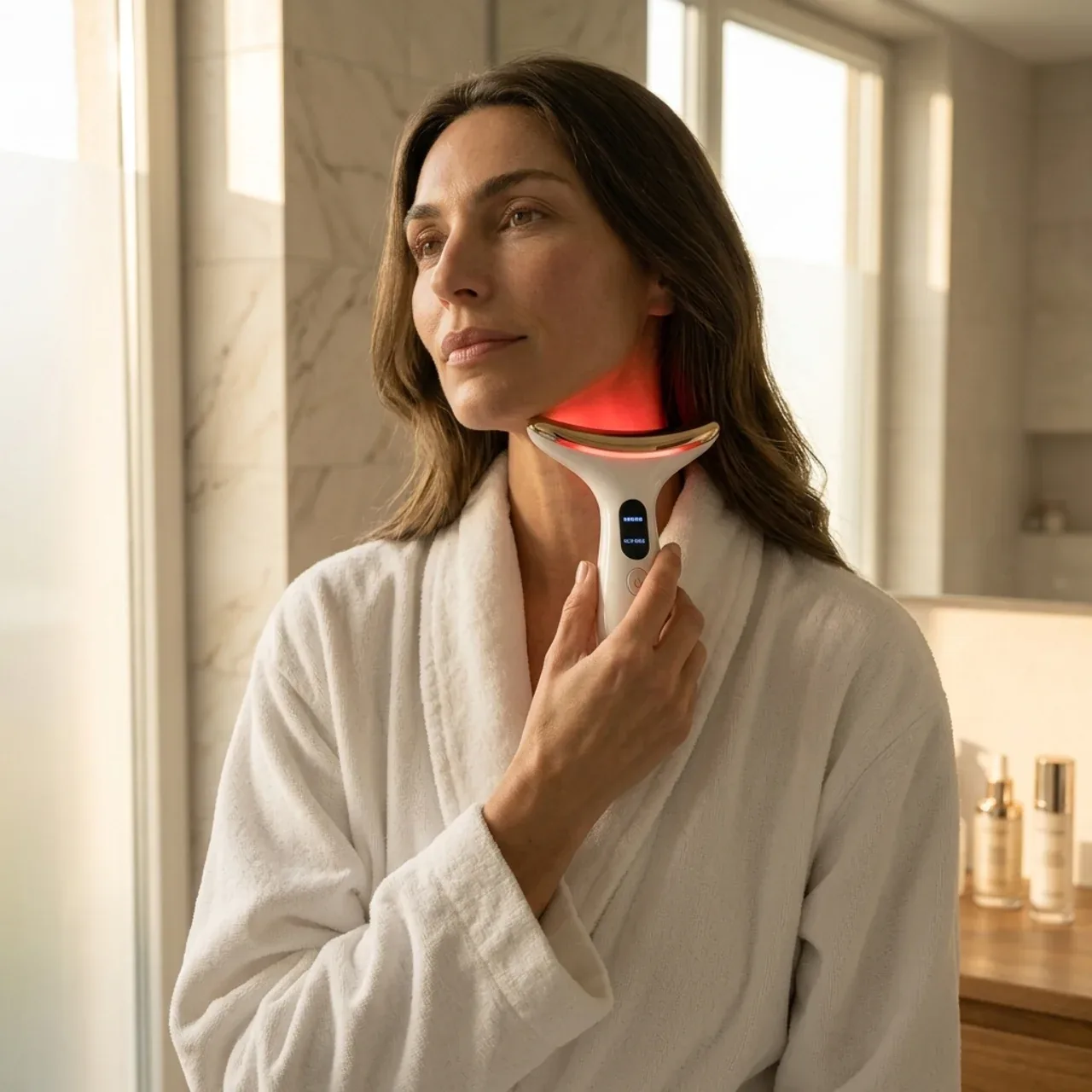
EMS, microcurrent and thermal — the three inputs a facialist charges you by the session, calibrated into a twelve-minute ritual you run yourself.
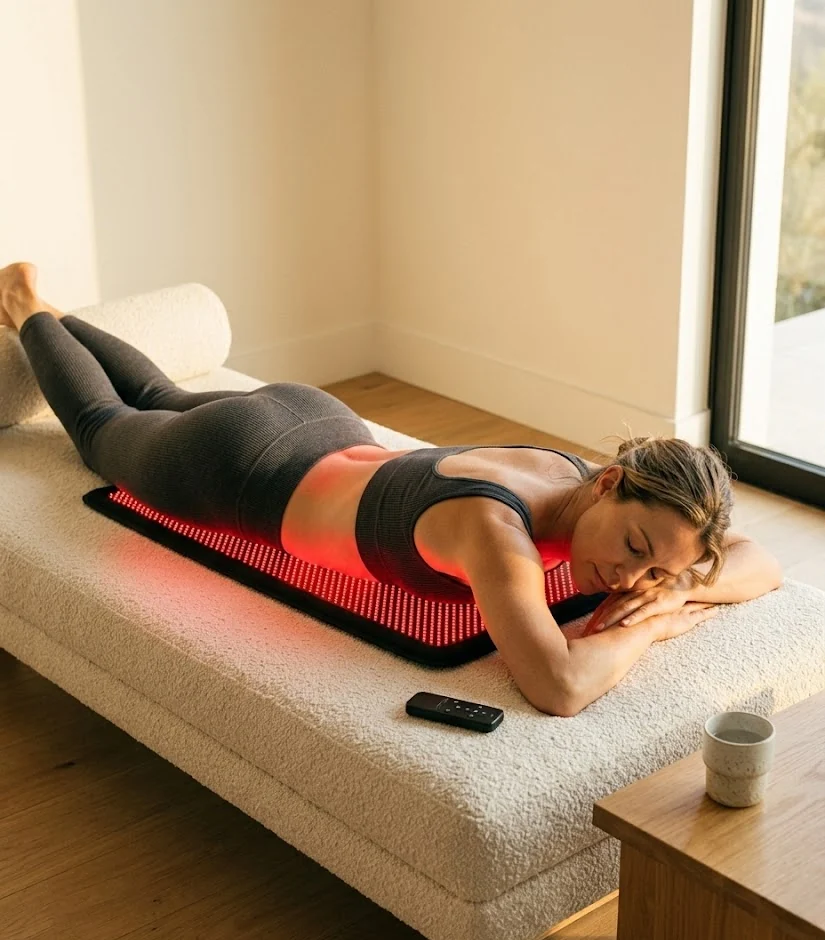
A 100 × 40 cm bed of 660nm red light and far-infrared heat — 120 × 40 cm in the longer size. You lie down, the array does the rest, and the nervous system gets twenty minutes it does not usually get.